About Estonia
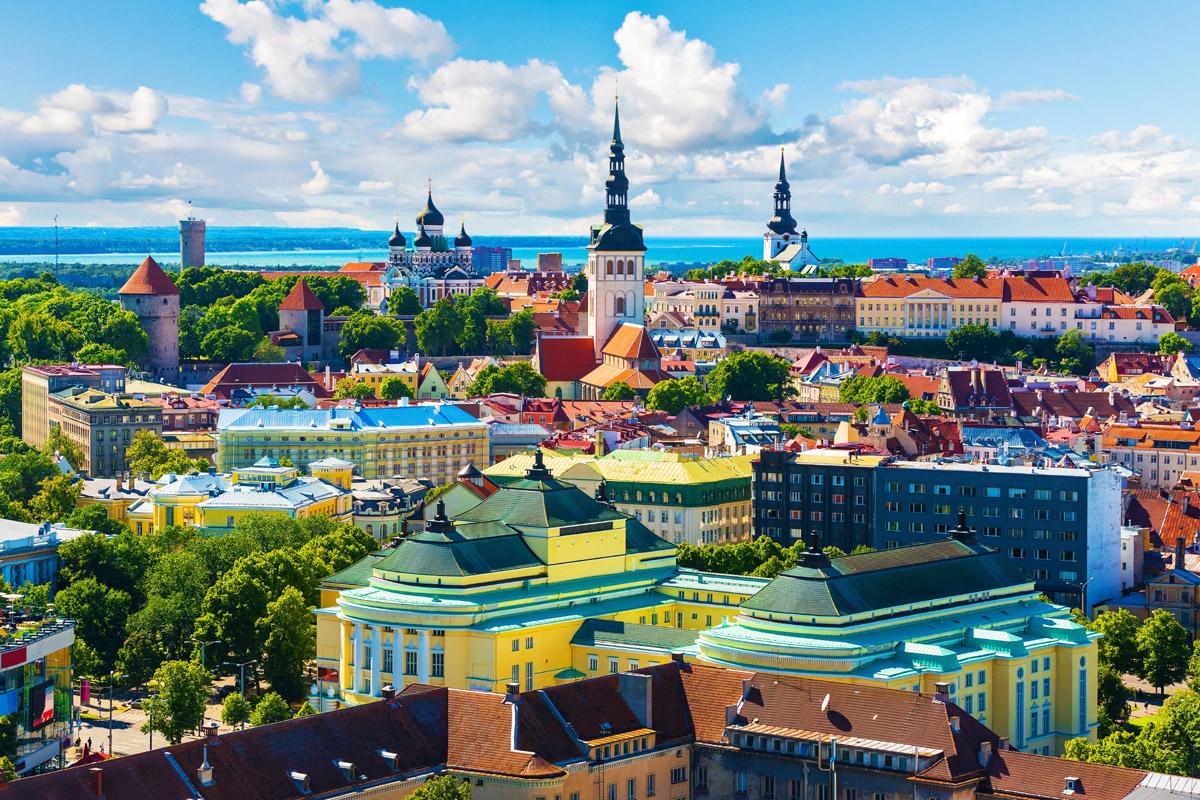
Estonia
Estonia has always attracted the attentions of others, due to it facing the Baltic Sea. Because of that, Estonia’s history is riddled with periods of invasion by various foreign powers. Before the Middle Ages, locals and Vikings from nearby Sweden skirmished with one another for control over the Baltic region (at one point, the Estonians kidnapped the Norwegian Viking Queen Astrid and her son – the future King Olaf Trygvesson). By 1227 AD, Estonian residents, occupied by Teutonic Orders and the Danes, were converted to Christianity.
During the 16th century, Estonia (along with nearby Latvia) was known as Livonia – nearby powers such as Sweden, Denmark-Norway, and even Poland fought for control of this region (with Sweden winning by 1561). A latter conflict, the Great Northern War (1700-1721) was won by Russia’s Peter the Great, conquering Estonia in the process. Russia used that war to successfully contest Swedish dominance over the Baltic Sea.
By the early 20th century, Estonia was subject to another foreign occupation – this time by the Germans, when its forces invaded it in 1917 (during the height of World War I). For the first time in its history, Estonia enjoyed independence (as a free state), after a year-long fight with the then-newly-formed Bolshevik Russian forces just after World War I. A peace treaty between Estonia and Soviet Russia in 1920 formalized that Baltic state’s independence.
The early stages of World War II made Estonia a Soviet satellite when Russia, demanding the use of that country for military purposes (to fight the Nazis), occupied it. The country then became known as the Estonian Soviet Socialist Republic (ESSR). Of course, that didn’t prevent the Nazis from occupying Estonia for a period of time (1941-1944), only to be retaken by the Red Army in 1944. Estonia remained part of the Soviet Union, until the fall of Communism there, permitting it to become independent again in 1991. With democracy taking bloom in Estonia from that point on, it became part of the European Union in 2004, with the use of the Euro as the country’s currency taking place in 2011 (making it the first former Soviet republic to do so). Estonia also became a member of NATO.
Due to its language and geographic proximity to Scandinavian countries like Sweden and Finland, Estonia identifies more with than region than it does with nearby Russia. This, despite 25% of the country’s population being Russian. Estonia’s north coast faces the Gulf of Finland – with the Finnish capital Helsinki on the other side. The Estonian language is closely related to Finnish, and that government is using its Scandinavian ties to drum up tourism. With its capital, Tallinn, being one of the best-preserved medieval cities in Europe, as much as 15% of the country’s GDP is from tourism. Visitors from nearby Finland and Russia are among the largest groups of foreigners visiting Estonia. Significant numbers of travelers from nearby Latvia, along with Sweden and the UK, have also visited Estonia. With the rise of the tourism industry, the English language (becoming an international “lingua franca”, in part because of the Internet) has been encouraged in Estonia.