About Japón
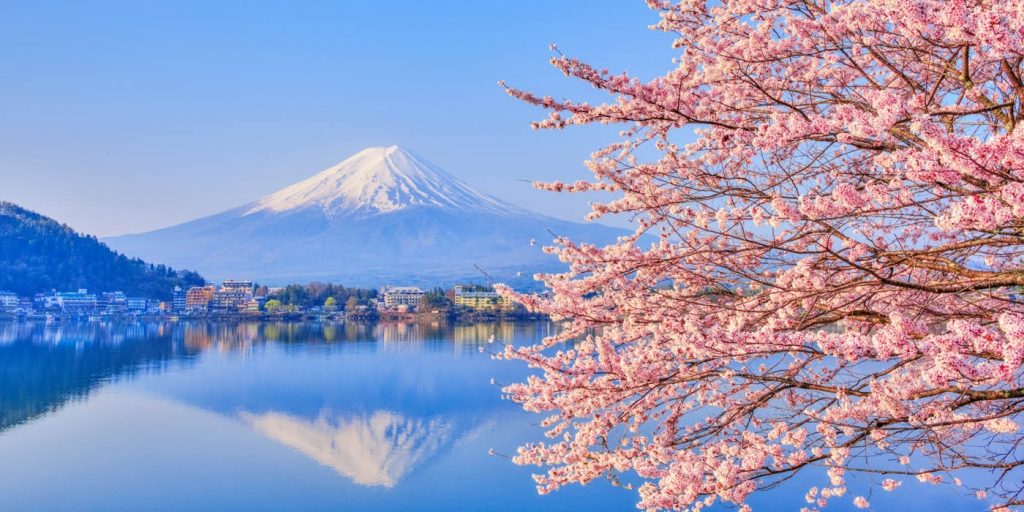
Japón
This Far Eastern nation is a volcanic archipelago of over 6,000 islands, located near China, Korea, and Russia, with its four largest islands (Honshu, Hokkaido, Kyushu, and Shikoku) composing most of Japan’s land area and population (which is now over 126 million people). With the country being settled as far back as 30,000 BC, Japan boasts a rich culture that is centuries old, along with a kingdom (the Imperial House of Japan) dating back to 660 BC. The country’s famed Samurai (military nobility) and culture are a legendary part of that history.
This once insular country gradually opened itself to interaction with the west, beginning with Portuguese traders and missionaries reaching Japan during the 16th century. More significant contact with the west occurred in 1854, when a treaty with USA opened Japanese ports to American trade. Japan’s industrialization occurred during the late 19th century, and was accompanied by regional conflicts with China (First Sino-Japanese War)(1894-95), and the Russo-Japanese War (1904-05). The latter conflict resulted in Japan gaining control over Taiwan, Korea, and the southern half of the Russian island of Sakhalin.
With Japan participating in World War I as part of the Allied Forces, the country’s imperial family pushed forward its expansionist agenda by occupying Manchuria (northern China) in 1931. With the Second Sino-Japanese War having started in 1937 (resulting in the Japanese invasion of other parts of China), it joined the Axis Powers (Germany and Italy) during World War II and invaded a variety of other Asian countries (from French Indochina – now Vietnam, to the Dutch East Indies – now Indonesia, Thailand, Philippines, Malaysia, Singapore, and numerous Pacific islands such as Papua New Guinea and the Solomon Islands). Along with bringing European colonial powers (such as UK, France, and the Netherlands) into the Pacific conflict, Japan also attacked Australia, along with the U.S. territory of Hawaii (Pearl Harbor). Only the Soviet invasion of Manchuria and the U.S. atomic bombings of Hiroshima and Nagasaki compelled Japan to surrender in 1945.
Japan’s post-war reconstruction period, which was overseen by U.S. General Douglas MacArthur, introduced a liberal democracy to that country, as well as a free economy. Today, Japan is one of the most prosperous and industrialized nations on the planet. Japan’s economic might reached a peak in the 1980s, and suffered from a major recession in the 1990s. With the country gradually recovering, Japan’s current economic performance is surpassed by China, which is now viewed as one of the largest nations in the world.
In terms of tourism, Japan received 10 million visitors in 2013, with that industry accounting for 3.5% of GDP. With tourism long taking a beak seat to Japan’s economy, as well as the country recovering from calamities such as earthquakes, tsunamis and the Fukushima nuclear disaster, many feel that there is much room to grow in this area. Japan hosting the 2020 Summer Olympics in 2020 will be seen as a major boost to the country’s tourism, especially in the Japanese capital of Tokyo, where many of the games will take place.